My Take on Vibe Coding for Students
Recently, I had the opportunity to interact with final-year engineering students during their project evaluations. Watching them present their work brought back memories of my own student days.
During my diploma, I built a Fingerprint Recognition System. During engineering, my project was a Smart Router Selection Algorithm using K-Nearest Neighbors (KNN). Both were written entirely in C++. Every line was typed manually. The projects were only a few hundred lines long, but every line taught me something.
More importantly, my engineering project introduced me to VRRP (Virtual Router Redundancy Protocol) through the IETF RFCs. That experience shaped my understanding of networking far beyond what textbooks could offer.
Looking back, I realize how fortunate I was to have an incredible guide, Dr. Sivanandham, our Head of Department. He wasn’t just an academic mentor. He stayed connected with students, encouraged curiosity, and even treated me to tea at the college canteen. Sometimes, those simple conversations become lifelong lessons.
The First Interview Question I Always Asked
Over the years, I have interviewed hundreds of engineers.
The very first question was almost always:
“Tell me about your final-year project. What exactly was your role?”
The answer revealed much more than technical skills. It showed ownership, curiosity, problem-solving ability, and how deeply someone understood what they had built.
If you’re a student reading this, I’d love to know:
What was your project title, and what exactly did you build?
The Startup Days
In 2014, I founded ActOnMagic Technologies.
We started with a MEAN stack boilerplate and gradually built integrations with Apache CloudStack and other private cloud platforms. Every API, every reusable component, and every deployment pipeline was built piece by piece.
I still remember Madhu, an intern from Amrita University, who was an exceptional programmer. Some of my former colleagues from Citrix, including graduates from IIT Madras, IIT Bombay, and NIT Warangal, joined us during the early development of our ActOnCloud proof of concept.
Those three weeks remain unforgettable.
Late-night coding.
Deployment after deployment.
Continuous debugging.
Vaibhav making delicious Maggi at midnight.
It was pure engineering. Later, NTT Netmagic acquired the ActOnMagic IP, and ActOnCloud became part of the larger MultiCloud platform.
One engineering principle never changed:
- Copy-paste code from the internet was discouraged.
- We wrote reusable components.
- We reviewed every commit.
We cared deeply about architecture, maintainability, and licensing.
From Cloud to HabitZup
In late 2024, I left the cloud infrastructure industry to pursue a very different dream.
After years of building enterprise technology—and frankly feeling exhausted by endless notifications, social media, and short-form content—I wanted to build something that helped people think better.
That became HabitZup™ Innovations | Helping People Think Better .
We started with an offline strategic card game to help families, students, and professionals make better decisions.
But Gen Z taught me something important.
They think fast. They learn fast.
And asking them to sit for twenty uninterrupted minutes around a card game wasn’t always realistic.
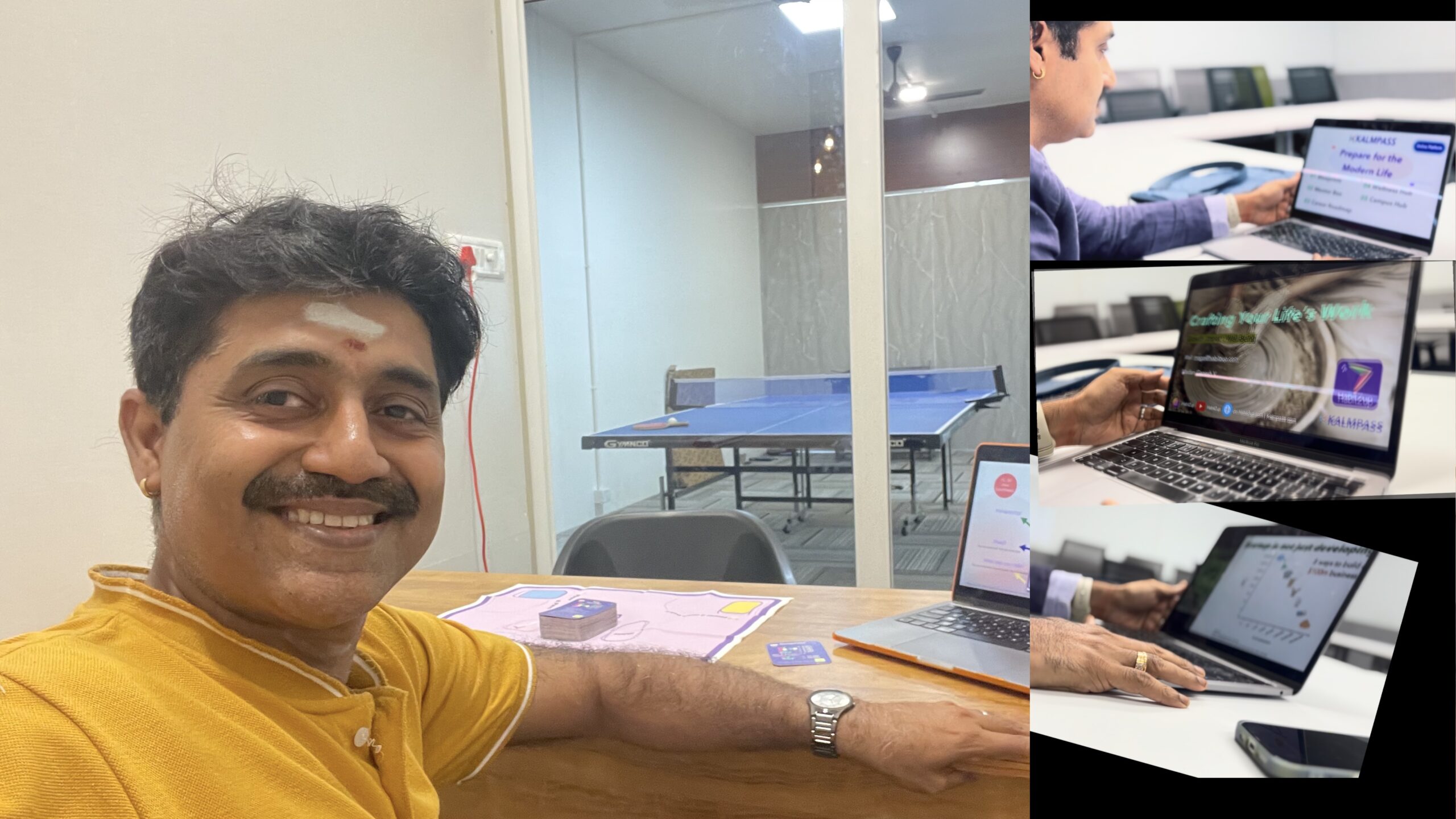
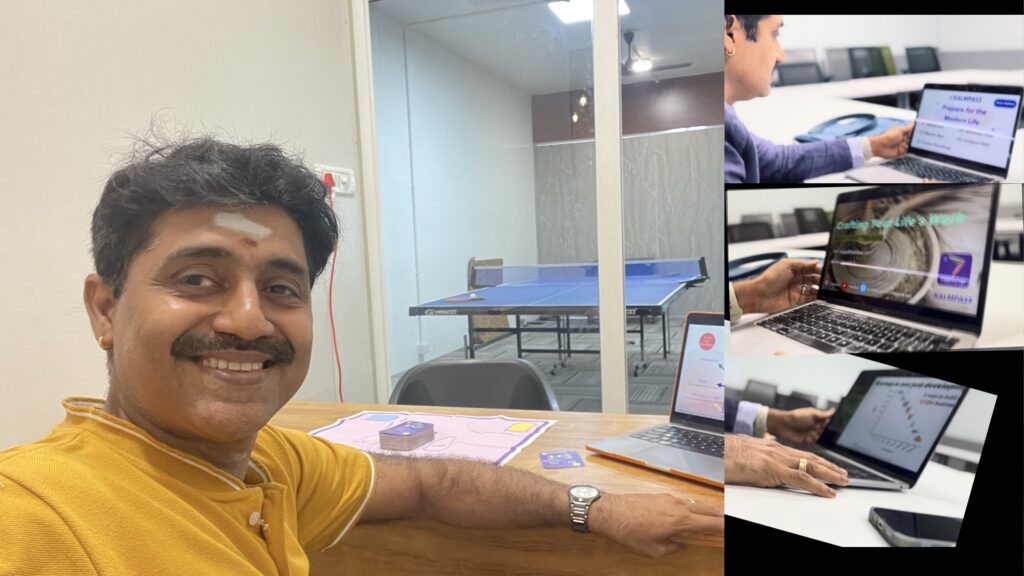
That eventually led me to build Kalmpass, a platform designed to help people prepare for life’s high-stakes decisions—career, relationships, money, parenting, leadership, and beyond.

Ironically, I built Kalmpass.com using the very thing everyone is talking about today:
Vibe Coding.
My Experience with Vibe Coding
Having spent more than a decade building cloud platforms, it’s easy to appreciate what’s happening underneath today’s AI coding tools.
Whether it’s Google, ChatGPT, Claude, or other platforms, they’re incredible productivity multipliers.
The companies that win this space won’t simply generate code.
They will own the entire developer experience—from prompting and architecture to debugging, deployment, testing, observability, and DevOps.
That is where the real advantage lies.
Using Vibe Coding, I developed Kalmpass significantly faster than I could have a few years ago.
But I also experienced its limitations.
- Sometimes the generated architecture wasn’t ideal.
- Sometimes code became repetitive.
- Occasionally important logic disappeared after long conversations because of context limitations.
- More than once, I spent half a day—or even an entire day—recovering a previously stable build after an AI-generated change.
The tools are improving rapidly. They will continue to improve. But they’re not yet substitutes for engineering judgment.
What Worries Me About Students
For entrepreneurs, Vibe Coding is a superpower.
For students… It is both a superpower and a trap.
Let me explain.
Think about social media.
Why are Reels addictive?
Because they compress achievements, celebrations, adventures, and emotions into sixty-second highlights.
Our brain experiences the excitement without actually living through the effort.
Eventually, real life can start feeling slower than the highlights.
Vibe Coding creates a similar illusion.
- Beautiful user interfaces.
- Amazing animations.
- Working applications.
Everything appears to happen almost instantly.
But
- if you don’t understand how the APIs work…
- If you cannot debug production issues…
- If deployment scares you…
- If you cannot explain why the generated code works…
Then someone else can easily replace you.
Prompting is becoming a commodity. Understanding systems is not.
The New Competitive Advantage
We are entering what I call a token economy. Every unnecessary AI request costs money. Every repeated prompt consumes tokens. Every inefficient workflow has a financial impact. Companies will increasingly value engineers who know when to use AI—and when not to.
The most valuable engineers will be those who can:
- Understand software architecture.
- Debug difficult production issues.
- Design efficient APIs.
- Deploy confidently.
- Review AI-generated code critically.
- Improve rather than simply regenerate code.
AI can write code. Engineers solve problems.
There is a big difference.
My Advice to Students
Don’t lose heart. You’re just getting started.
Follow this:
- Go back to the code that AI generated for you.
- Break it intentionally.
- Remove something.
- Change something.
- Make it fail.
- Then fix it yourself without asking AI immediately.
That struggle is where real learning begins.
Every bug you solve independently builds confidence. Every debugging session sharpens your thinking. Every architectural decision develops engineering maturity.
Eventually, you stop depending on AI.
Instead, AI starts depending on your judgment.
That’s the difference between someone who merely writes prompts and someone who builds products.
And perhaps, that’s what I would call Token Intelligence – the ability to use every AI token wisely because you understand the system deeply enough to ask better questions, recognize wrong answers, and solve the problems that truly matter.
I’d love to hear from both students and experienced engineers. What do you think is the one engineering skill AI should never replace? Let’s learn from each other’s experiences.