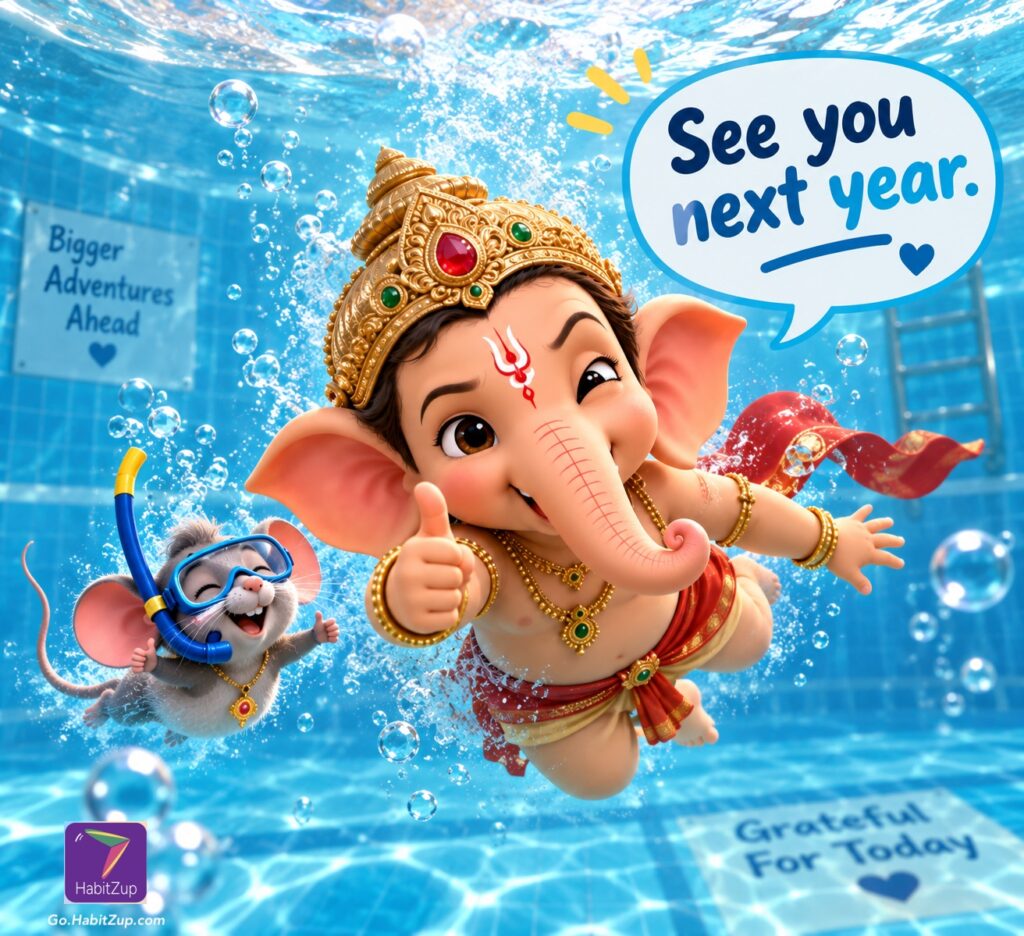

We just wrapped up our Ganesha Chaturthi celebrations for this year! It’s hard to believe, but our site, Iraivan.me, was launched right after Ganesha Chaturthi back in 2024.

Where I live, our society goes all out for this festival. Everyone comes together with so much energy—500 to 1,000 people in one small community! Some years, the budget even touches 12 lakhs. On one hand, I love seeing everyone gather like this. But on the other hand, I can’t help but worry a little. A lot of people get caught up in the celebration without really understanding why we do it, or thinking about the environment and our kids’ future.
So, I wanted to share a few thoughts on the why, the how, and a fresh way to look at Lord Ganesha.
Let me start with a simple chant: “Aum Gam Ganapathiyey Namah.”
Making Ganesha with Our Own Hands
In our home, we usually make our own Ganesha idol out of clay. It simulates how Goddess Parvati created Lord Ganesha in the stories. My Gurus always say that when you build something with your hands, it helps cleanse your subconscious mind. Plus, there’s a real, quiet joy in seeing something you created with your own hands sit right in front of you.
If you prefer buying an idol from outside, that’s totally fine! Just make sure the material is natural and doesn’t harm Mother Nature. Plain, natural clay is always the best.
Little Details to Look For
When you make or pick a Ganesha, there are a few meaningful details to keep in mind:
- He should hold a Pasam (noose) and an Angus (goad).
- He should have his broken tusk in his right hand and some sweets in his left.
- His trunk should be touching one of his hands.
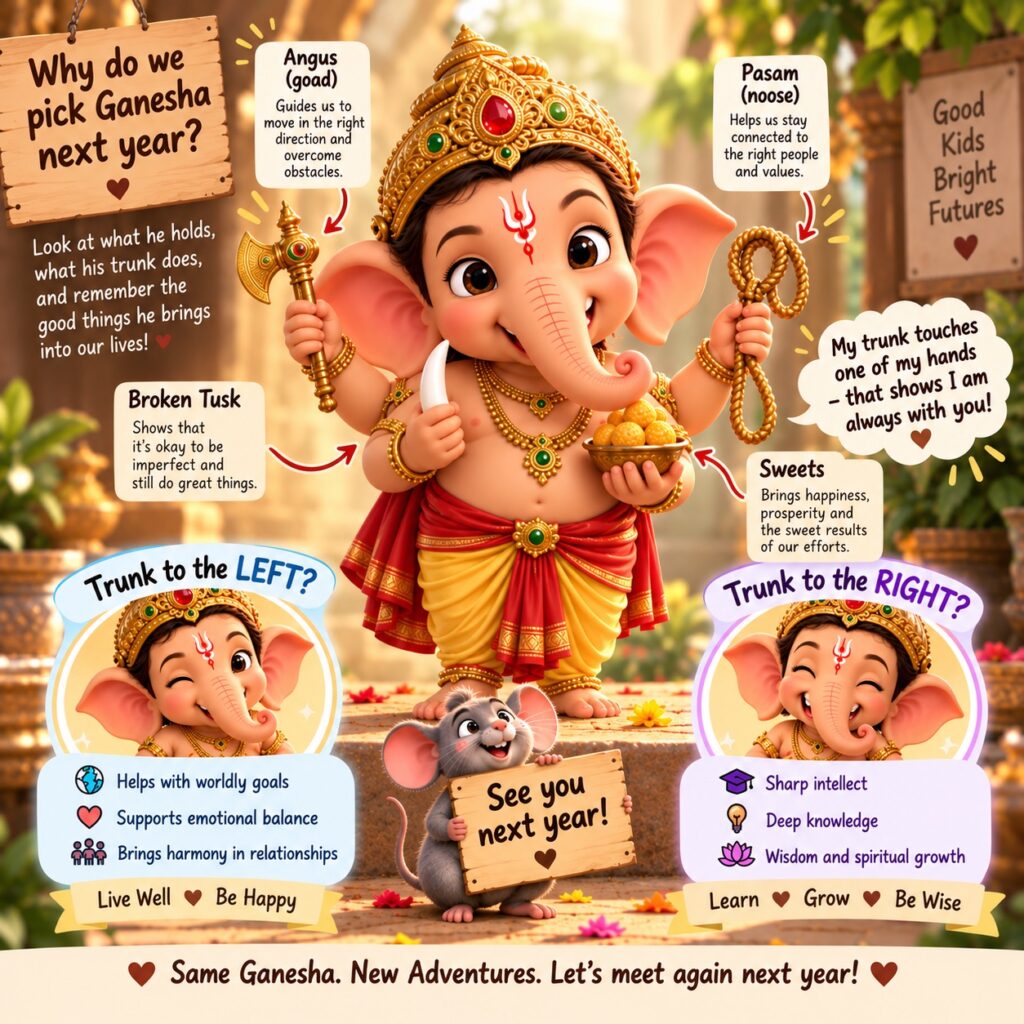
If the trunk turns to the left, it signifies help with worldly goals and managing our emotions. If it turns to the right, it’s all about sharp intellect, deep knowledge, and wisdom.
The Deeper Meaning of Visarjan
Usually, keeping Ganesha at home for 1, 3, or 5 days works best. Just remember to offer him his favorite food every morning and evening with devotion.
When the rituals are done, it’s time for Visarjan—giving Ganesha a loving send-off. But do you know what this actually means? Have you ever explained it to your kids?
The whole concept is a beautiful demonstration of Advaita—the idea that we are all connected. The clay Ganesha we made represents our Jeevatma (our individual self). When we immerse him into a river or the ocean, it signifies our self merging back into the vast Paramatma (the supreme universe). It’s a reminder that
Everything comes from nature and eventually goes back to it.
A Few Big “NOs” (In My Opinion)
If we want to honor the festival properly, I think there are a few things we really need to rethink:
- Bursting Crackers: The air and noise pollution is bad for the environment, and it genuinely distresses local pets and elderly neighbors.
- Traffic Chaos: Blocking roads and taking over public spaces causes real inconvenience to others. We need to be more considerate.
- Dressing Tradition: Let’s wear our traditional attire for the puja and pass the value of our culture down to the next generation.
- Blaring Loud Music: Playing high-volume, commercial songs right after a puja completely wipes out the calm, positive vibrations created during the prayers.
I remember reading a quote at the Sringeri Temple that stuck with me:
“God’s love cannot be bought with money—only through devotion.”
A Personal Realization About Energy and Ego
In my society, we have a habit of keeping a silver coin during the Gana Homa and auctioning it off later for noble causes. I was actually the one who won the inaugural auction back in 2024 with a bid of 50K. Last year and this year, the highest bids were around 25K.

Now, my personal ego jokingly tells me, “Hey, you’re going to stay the highest bidder until India wins the next World Cup!”
But jokes aside, this made me realize something deeper: an auction like this doesn’t really serve a spiritual purpose.
Yes, the silver coin absorbs positive vibrations during the homa. But to keep those vibrations alive at home, you have to do daily puja with genuine devotion. You can’t buy spiritual energy.
Not only that, in our layout, the stage is set up with Lord Ganesha on one side and space for kids’ performances on the other. But once the kids finish, people start blasting loud folk and Bollywood tracks. It completely dilutes the spiritual energy we just built during the homa. That’s the exact reason temples don’t play fancy commercial songs! If we want to retain that positive energy, we have to protect the environment it’s kept in.
Looking Forward
At the end of the day, from Ganesha’s perspective, none of this noise matters. He accepts anything offered with love and really doesn’t mind what we wear or do. He sees everything, and the world runs on the simple law of karma—good returns good, and bad returns bad.
So as we look ahead, let’s keep our celebrations simple, thoughtful, and full of genuine heart.
I’m Madan Ganesh – Author of I’m NOT Busy – A guide to conscious living. If you like reading, Check out https://go.habitzup.com/im-not-busy/